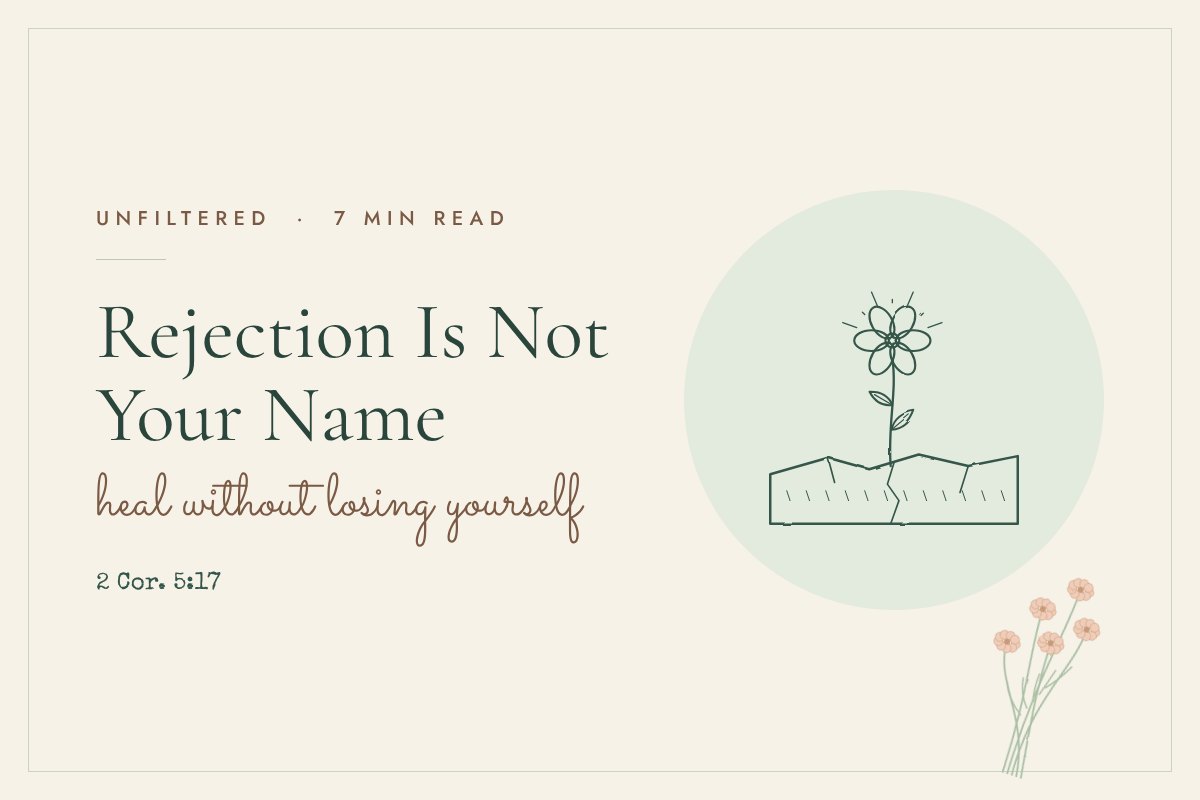
Rejection can hurt far beyond the moment someone says no. Being excluded or dismissed may change how you enter conversations, interpret silence, or think about your worth. Not every disappointment affects us in the same way, but repeated or significant rejection can leave questions that deserve care. I want to help you recognize those questions and consider how your identity in Christ can support a life that is larger than someone else’s response.
How rejection wounds the soul
When friends, relatives, or people whose opinions matter reject us, it can become difficult to separate their response from our identity. A quiet message takes root: ‘I am unwanted,’ or ‘I am not enough.’ What began as a painful experience starts influencing what we expect from everyone else. But in Christ, that message does not have the final word. We can acknowledge the loss without making it the whole truth about who we are.
Therefore, if anyone is in Christ, he is a new creation. The old has passed away; behold, the new has come.
Remember where your welcome comes from
Psalm 27:10 expresses confidence that God receives the speaker even when the closest family relationships fail. The verse does not make abandonment painless or require pretending that family does not matter. It offers a place to bring the fear that being refused by someone important means there can be no welcome anywhere. In John 6:37, Jesus promises to receive the person who comes to Him. The surrounding discussion concerns faith in Him and the life He gives. This is deeper than the hope of becoming popular or romantically chosen. Human rejection does not become a reliable description of Christ’s response to someone seeking Him. You can approach Him without first making another person reverse their decision.
Hebrews 4:14-16 grounds that approach in Jesus, our compassionate High Priest. Believers are invited to seek mercy and help in their need. You do not have to wait until you feel confident to pray. You can tell Him that you feel humiliated, that you miss someone, or that you keep imagining what you should have said differently. Keep the prayer honest enough to include the loss you actually experienced. You may be grieving a friendship, a hoped-for relationship, a place in a community, or an opportunity you worked toward. God does not need a polished explanation before you can bring Him that disappointment.
Sometimes rejection changes the way you enter an ordinary conversation. You watch for signs that you are unwanted, read silence as disapproval, or decide to leave before anyone can turn you away. Those reactions can help you see how deeply the experience affected you. They do not have to become rules for every relationship that comes afterward.
After rejection, you may find yourself preparing for another disappointment before a new person has had the chance to know you. Pulling away can feel protective, especially when affection has been unreliable. Notice that response with compassion. You can keep wise boundaries while gradually learning whether this particular person is worthy of trust.
A painful conclusion can grow like an unwanted plant in a garden. “Nobody wants me” begins to occupy space that once held curiosity, friendship, or hope. Examining that conclusion matters, but struggling with it does not mean you have failed God. You can bring it into the light and receive help as you learn what deserves to grow in its place.
Examine the conclusions the loss has taught you
A photograph can capture something real while leaving most of the scene outside its frame. If you cut it down further and hold it close enough, the small piece can fill your entire view. Rejection can have that effect on the way you interpret your life. One moment becomes the only image you consult. Stepping back does not deny what the photograph shows; it allows the rest of the scene to become visible again.
Ask what else belongs in the picture. Who has shown consistent care? What responsibilities have you fulfilled? Where have you acted with kindness or courage? These details do not cancel the rejection. They keep a painful response from becoming the only evidence you are willing to consider when thinking about yourself.
The garden image also needs patience. Pulling out an unwanted plant once does not finish caring for the soil. You continue watering what you want to grow, noticing new shoots, and tending the space over time. Likewise, challenging a harsh belief once may not stop it returning. Keep making room for truthful relationships and ordinary activities that support the life you want to live.
If feedback accompanied the rejection, separate what is specific and useful from what is contemptuous or vague. You may need to improve a skill or acknowledge a mistake. You do not need to accept an insult as a complete account of your character. Learning from an experience is possible without agreeing that the experience has settled your value.
The LORD is near to the brokenhearted and saves the crushed in spirit.
Building a new foundation in Christ
Building a new foundation in Christ begins with separating what happened from what it taught you to believe about yourself. “They did not choose me” describes an experience. “Nobody could ever love me” makes a claim about your entire life. The first may be painful and true. The second does not become true simply because the rejection hurt deeply. You can bring both the loss and that conclusion to God.
You do not need to become someone else to make the rejection make sense. A person’s no may tell you that a relationship is not possible, that an opportunity was not offered, or that someone failed to treat you with care. It cannot tell you everything about your character, your future, or your worth. Receive any useful feedback without accepting contempt as an accurate description of who you are.
Let trust grow through small experiences of consistent care. You do not have to tell everyone everything or remove every boundary. You can begin by answering a thoughtful message, spending time with a dependable friend, or sharing one honest concern with someone who has earned your trust. Notice how they respond over time. New relationships deserve to be understood through their own actions, not only through what someone else did.
Receive care without making recovery a performance
Romans 12:15 asks believers to share both joy and sorrow. Sometimes the care you need is a person willing to listen without rushing to explain why the rejection happened. You can ask for that directly. A friend does not have to solve the whole situation to sit beside you with patience.
If distress is making daily life difficult, seeking qualified support can also be a responsible step. You do not need to prove independence by carrying everything alone. At the same time, give new relationships room to grow gradually rather than asking one person to undo every previous loss. Consistent care is learned through time and mutual freedom.
Another person’s right to decline a relationship matters, even when the answer hurts. Respect a clear no without using persistence, guilt, or spiritual language to change it. Your dignity does not depend on persuading them, and their refusal does not remove your capacity to live a meaningful life.
You can also allow yourself to grieve without making recovery a way to win the person back. Healing from rejection does not require proving that they made a mistake. Your life has value beyond their response. Return to the friendships, responsibilities, and interests that help you live as yourself, even while the loss still hurts. Keep returning to the difference between a painful experience and a permanent identity. Bring the lie you notice to Scripture, and talk it through with someone who will listen with care. You are not required to feel confident before taking one small step toward connection. You can move slowly, keep wise boundaries, and still refuse to let rejection have the final word about who you are.
Read the Scripture passages
Found this helpful? Share it with someone who needs it.