Yes, you can forgive someone and still have boundaries. Forgiveness isn’t pretending that nothing happened. It isn’t calling evil good or saying “It’s fine” when you know it is not. God doesn’t ask you to lie about your pain. You can release the desire for revenge while taking seriously what needs to change before trust could grow again.
You don’t have to ignore your heartache or convince yourself that “it could have been worse.” Forgiveness isn’t a quick “I’m over it” while your heart is still lying in pieces on the floor. It isn’t forgetting, and it isn’t rushing past the pain to make other people comfortable.
Put on then, as God’s chosen ones, holy and beloved, compassionate hearts, kindness, humility, meekness, and patience, bearing with one another and, if one has a complaint against another, forgiving each other; as the Lord has forgiven you, so you also must forgive.
You are allowed to cry and to be angry. Anger is not always a sin. Sometimes it is a signal that a boundary was crossed.
Separate forgiveness, reconciliation, trust, and access
These words answer different questions. Forgiveness concerns how you respond to the wrong, including whether you pursue revenge. Reconciliation concerns whether a damaged relationship can be restored. Trust concerns what you can reasonably rely on someone to do. Access concerns what contact or responsibility you are willing and able to offer. A decision about one does not automatically settle the others.
Suppose someone borrows your car, drives recklessly, and damages it. You may choose not to humiliate them or make them suffer. You can accept an honest apology and still decline to lend the car again. Acknowledging their regret does not establish that they now drive responsibly. The keys represent a future responsibility, and deciding who receives them requires more than deciding how to respond to yesterday’s wrong.
John 2:23-25 describes Jesus declining to entrust Himself to people whose hearts He knew. We do not possess His knowledge of another person’s heart, and this passage is not a detailed manual for relationships. It does, however, challenge the assumption that love always requires unlimited trust. Our decisions need truthful observation, humility, and appropriate counsel, rather than claims that we can see someone’s hidden motives perfectly.
Forgiveness is not the same as reconciliation
Forgiveness doesn’t always mean rebuilding the relationship. Sometimes it means releasing the person who hurt you while choosing not to reopen the door. You don’t have to keep a seat at your table for people who have shown that their presence harms more than it heals. Forgiveness is about your freedom, not forced reconciliation.
Colossians 3:13 calls us to forgive in response to Christ’s forgiveness. That call must not become a weapon against someone whose pain continues. Reconciliation, which means restoring a relationship, is a different process. Where serious wrongdoing has damaged it, repentance, trustworthy behavior, and wisdom matter. Sometimes care for both people requires maintaining a boundary.
An apology can open a conversation, but trust grows through what follows it. Does the person accept responsibility without blaming you? Do they respect the boundary even when it inconveniences them? Are they willing to make amends and allow you time? These questions help you distinguish a wish to repair the relationship from a demand to return immediately to the way things were.
Look for repair that does not demand a reward
Real responsibility makes room for the consequences of a wrong. Someone may repay money, correct a damaging lie, or seek help for harmful conduct without receiving the relationship they want in return. If an apology comes with a deadline for your trust, it is reasonable to question whether the person understands what repair requires. Changed behavior matters even when nobody promises renewed closeness as a reward. Matthew 18:15-17 places accountability within the life of the church. Jesus describes wrongdoing being addressed and other people becoming involved when it remains unresolved. The passage does not teach that forgiving means endless secrecy. It should never be used to require a person facing abuse to confront the abuser privately before seeking safety or reporting serious harm.
Romans 12:18 recognizes that living at peace depends partly on what is possible and on what belongs to our responsibility. You cannot supply another person’s honesty or willingness to change. You can answer for your own conduct without accepting blame for their refusal to respect a boundary. A relationship needs participation from both people; one person’s prayerful effort cannot manufacture that participation.
Forgiving someone who has harmed you does not automatically give that person access to your life. Some relationships remain too destructive to rebuild, and some cannot return to their former closeness. Ask the Holy Spirit for discernment, and consider what the person’s actual conduct shows. Needing support to make that decision is not a spiritual failure.
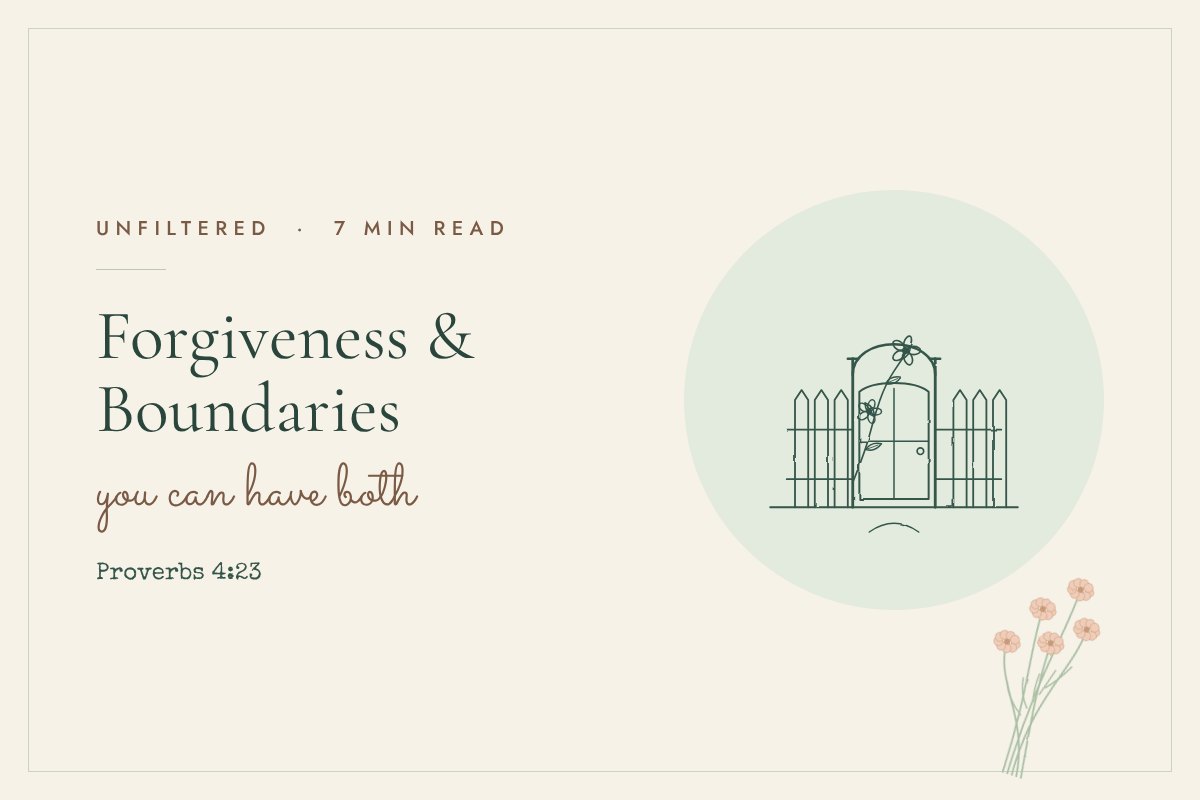
Keep your heart with all vigilance, for from it flow the springs of life.
A boundary should describe what you will do, rather than try to control the other person. You might say, “I am willing to talk, but I will end the conversation if I am insulted,” or, “I cannot lend you money again.” You do not need to explain it until the person agrees. Speak clearly where it is safe to do so, and choose a response you can actually follow through on.
Some relationships can be rebuilt gradually. Others need more distance, or no further contact. Forgiveness does not give every person the same access to your time, home, or private life. If you are unsure, involve someone trustworthy who understands the situation and takes your safety seriously. You can be open to change without ignoring a repeated pattern of harm.
Make the boundary clear enough to live by
Consider an ordinary home. Welcoming someone into the living room does not mean handing them every key, inviting them into every bedroom, or sharing every private document. Different levels of access can coexist with genuine hospitality. Relationships also contain different kinds of access: conversation, personal information, money, time, and physical closeness. You can make decisions about each without treating every limit as a rejection of the person’s humanity.
Proverbs 22:3 commends noticing danger and seeking refuge. It offers wisdom about prudence, not permission to blame someone who was harmed. A useful boundary names an action you can take: declining a visit, protecting private information, or arranging support before an unavoidable interaction. Where safety is uncertain, seek help making that plan rather than relying on a dramatic announcement that may increase the danger.
Boundaries also need honesty about your intentions. Withholding contact to force an apology is different from taking distance because contact is harmful. Ask what the limit protects, whether it is workable, and who can support you in keeping it. You may review a boundary if circumstances genuinely change, but you do not owe a review on someone else’s timetable. Mercy leaves room for wisdom and for the limits of your own capacity.
How to forgive and still protect your heart
Be honest with God about the pain. Tell Him how you really feel and ask for help releasing revenge. You do not have to force every emotion into order before setting a necessary boundary. Protect your heart, and love from a safe distance when you need to. Ask for the wisdom to see clearly. You might pray, “Lord, help me understand what is possible in this relationship, what is mine to do, and what I need to entrust to You.” Before you rebuild a relationship, consider what has actually changed. Pray for wisdom, listen to trustworthy counsel, and pay attention to consistent behavior rather than pressure to hurry. You can forgive while allowing trust to develop slowly, and you can keep a boundary when the pattern remains harmful. Mercy does not require you to stop telling the truth about what the relationship is like.
Read the Scripture passages
Found this helpful? Share it with someone who needs it.